As I finished up my last semester of graduate school and began applying for administration jobs in education I was told over and over that “culture eats strategy for breakfast” (Peter Dunker). It did not matter how flawless your plans were or how you approached problems when running an organization if you did not have the right culture. Which, absolutely, that makes complete sense. The problem is I have seen too many leaders focus solely on culture and forget that structure and strategy are key components to having a positive culture. So how do we have both?
Basic Needs and Self Care
In 2021 I attended a conference led by Tina Boogren about self care in the workplace. She said that creating a positive culture in any environment always started with making sure your team’s basic needs were being met.
Theme: Drink the dang water!
Her point was that when people are looking at how to take care of themselves it is not simply relaxing and having plenty of “you” time, but making sure you are living a healthy life style with plenty of sleep, nutritious food, hydration, and a safe place to call home. Nothing else matters in a work place if a person’s basic needs are not being met. One suggestion that I loved was to make sure you have a fun water bottle that you like, this will encourage you to drink the dang water!
Safety and Security
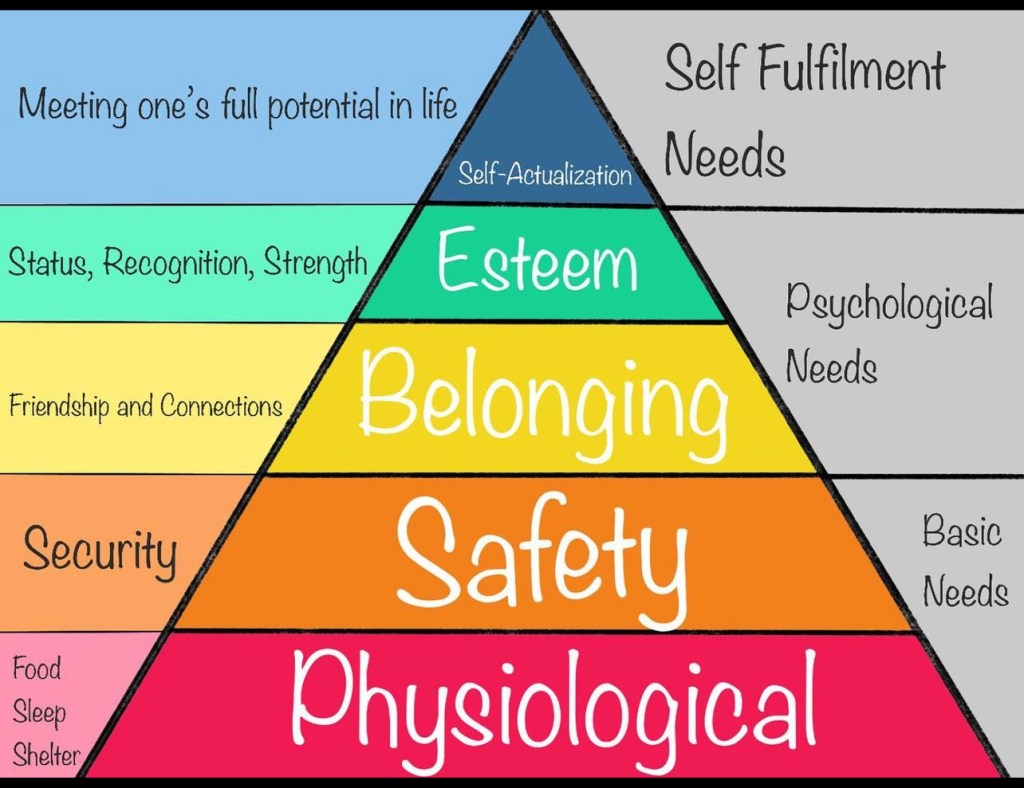
Next, she went into Maslow’s Hierarchy of Needs; the two bottom blocks make up our basic needs. We already discussed the physiological calls, but what about safety? Safety is not just physical but also emotional and mental safety. In a workplace this looks like security in knowing what is expected of you on a daily basis. If your work environment has no structure then there is a lack of security in knowing what the expectations are each day. This can lead to stress and anxiety that cannot be overcome with relationship building.
Belonging and Relationships
Once you have the basic needs met then you can shift your attention to a sense of belonging with your staff. But the thing about Maslow’s Hierarchy of Needs is the pyramid shifts every day. Just because you set up the environment with security at the beginning of the year does not mean that it is set forever. It is a constant review of how your building is doing as a whole and how your individual people are doing. This is why having those relationships and culture in place will help you check in with your people to determine how they are doing. It is extremely vulnerable to share when a person does not have that base of physiological needs met. So leaders have the impossible job of doing all three blocks (physiological, safety, and belonging) at once. We begin by creating a foundation to start with.
Foundation of Structure in a Workplace
When I accepted my role as a building principal I set out with the motto of “clear is kind”. I looked at all systems that were currently in place and evaluated if they were clear and concise. The first aspect that I addressed, and would encourage anyone else to evaluate, is how information is sent out on a regular basis. I developed a staff index that was broken into 9 boxes; Calendars, Forms for Teachers, SEL, Expectations and Responsibilities, School Building, Individualized Programs, Curriculum and Instruction, Leadership, and Discipline and Referrals. This is our go to location for all information in the building. My staff knows if they need access to anything, it is going to be linked here.
In addition to creating a one stop shop for all information, my staff quickly realized that I prefer to have things written down so that it can be easily accessible. I have created a landing doc for each major aspect of the school year. I have shifted to having my faculty meetings run by using a crisp memo that outlines the goals, whys, and new information. Every bit of information can be found and reviewed when needed and it is always linked on the staff index.
Several components on the staff index were developed with staff help. Everything that impacts my team on a daily or regular basis I made sure to get input before creating and then feedback after implementation. This is where creating security within an organization and building relationships go hand and hand. As I continue my role as a leader I will always review current practices, how I can make things run smoother and how I can support my staff so they feel heard and are valued. So does culture eat strategy for breakfast? I will let you decide.
 Haden's Corner