5 Key Strategies for Thriving Team Work

5 Key Strategies for Thriving Team Work

Workplace dynamics can make or break a person. A few years ago, I was fortunate to work with an incredible team. Our personalities meshed well, each of us brought different strengths to the table, and while we occasionally had disagreements, we always had each other’s backs because we were united by a common goal. So what that team work?

Over my 12 years in education, I’ve had the opportunity to work in five different districts. Some teams functioned more efficiently than others, and through these experiences, I’ve developed valuable skills in building positive, collaborative teams across various settings. For the past five years, I’ve been in leadership roles, where I’ve identified five key aspects of fostering an environment that allows staff to thrive together.

Empathetic Listening

  • Be fully present to hear concerns and struggles.
  • Avoid multitasking when speaking with a team member; give them your full attention.
  • Take notes and follow up on discussions.
  • Guide your team toward solutions rather than solving problems for them.

Goal Setting

  • Establish team norms to ensure everyone is aligned.
  • Collaborate with the team to define goals rather than dictating them.
  • Create SMART goals with measurable indicators to track progress.
  • Set a shared vision to keep the team inspired and focused on the future.

Highlight Differences Among People

  • A team’s strength lies in its differences; celebrate them.
  • Foster inclusivity by valuing more than just task completion.
  • Build teams with complementary strengths.
  • Encourage leadership development in both areas of strength and areas for growth.

Clear is Kind

  • Communication is key; great ideas mean nothing if they aren’t clearly conveyed.
  • Teams thrive when communication is clear and concise.
  • Establish a process for addressing confusion and encouraging feedback.
  • Recognize that people process information differently; understand how your team communicates best.

Make Work Fun

  • Many people spend more time with colleagues than with family, create an enjoyable work environment!
  • Plan monthly team-building activities or small treats.
  • Celebrate special occasions for each team member.
  • Regularly check in with team members to find ways to make work more enjoyable.
Effective Leadership and Organizational Change: A Visionary Approach

Effective Leadership and Organizational Change: A Visionary Approach

It is critical to always be reflective in your current beliefs and practices. It is also critical to practice what you preach. So I have taken the time to revise my leadership framework after several years in an administrative position.

Personal Mission

My mission is to foster an environment rooted in collaboration, inclusion, and ambitious goal setting, driving team growth and development through supportive, effective communication and constructive feedback that leads to achieving team objectives within clearly defined expectations.

Vision for Leading

I believe a team’s success is directly tied to its collective capacity. When building a team, it’s essential to focus on expanding the abilities of each member so that everyone can contribute meaningfully to the process. This approach maximizes team efficiency and ensures that all components function at their highest potential. Effective leadership requires motivating individuals, setting measurable goals, and establishing clear expectations for all members with a focus on the organizations mission and vision. A leader’s role is not only to guide the team but also to place the right people in positions where they can leverage their strengths while developing areas for growth.

Vision for Organizational Change

Change is an inevitable part of life, and how people respond to it often determines their potential for growth. In business, change is not only necessary but essential for progress. It is the responsibility of a leader to recognize when change is required, collaborate with key stakeholders to develop a plan, and effectively communicate that plan to the entire team.

When I encounter challenges that require organizational change, I take a strategic approach. I begin by clearly defining the issue at hand, ensuring that everyone understands its nature and impact. I then establish measurable goals that are easy for all stakeholders to comprehend. This is followed by a detailed analysis of the organization’s current state, outlining how existing practices affect the work being done.

Lessons learned from past experiences are carefully considered, allowing for the development of strategic priorities that address the desired outcomes, current realities, and those lessons. From there, I create an implementation plan, which includes timelines, budget requirements, employee roles, and actionable steps for executing the change. Any supporting documents that provide additional context are also included.

By following this process, I ensure that the rationale for change is clear and that the goals are well-defined, minimizing uncertainty and emphasizing the positive outcomes. My primary concern is always determining when change is truly necessary. Change fatigue is a real challenge, and this method helps me assess whether a change needs to happen immediately or if it can be postponed.

Vision for Collaboration and Inclusion

Collaboration and inclusion begin with a foundation of trust and respect. When these elements are in place, individuals feel safe to share ideas, take risks, and passionately engage in their work. This environment fosters a sense of value and empowerment, encouraging everyone to contribute, which is essential for problem-solving. Employees thrive in a flexible, supportive atmosphere that promotes creativity, leading to higher motivation and productivity.

Leaders play a crucial role in modeling this collaborative and trusting culture. They must demonstrate honesty, transparency, support, and consistency. Building this culture involves celebrating and acknowledging achievements and providing space for team members to express opinions, suggestions, and concerns in a constructive, purposeful way. Leaders should be active listeners, offering accurate feedback designed to support growth, both individually and as a team.

Vision for Goal Setting, Solution Oriented, and Decision Making

Creating an environment focused on goal setting, solution-oriented thinking, and data-informed decision-making hinges on a deep understanding of team dynamics and individual personalities. I believe the most crucial element is fostering an atmosphere where staff are encouraged to take risks and learn from failures. This requires understanding how each person responds to feedback and delivering it in a way that promotes growth. Setting personal, measurable goals is an effective first step in getting to know team members, showing them that their personal development matters just as much as their contributions to the company.

Once I have a solid understanding of my team, I focus on modeling solution-oriented behavior, grounded in data-driven decision-making. It’s essential to assign team members to roles that play to their strengths, enabling them to thrive and achieve both personal and organizational objectives. Establishing processes that keep discussions positive and solution-focused is critical to maintaining momentum. I do this by providing the necessary tools and setting clear expectations, which helps teams stay aligned with their goals and projects.

Ultimately, every decision must be made with the organization’s mission, vision, and goals in mind. Data should serve as the foundation for choices that drive us toward the purpose of each project.

Vision for Communication

My communication motto is ‘Clear and Concise is Kind.’ When preparing to communicate with stakeholders, I focus on minimizing potential miscommunication by being as specific as possible with fewer words. Over-explaining can create confusion, so clarity is key. I also believe in consistent, honest, and accessible communication, as people often need to hear or read information more than once to fully absorb it.

Creating a culture of transparent communication fosters a trusting environment that enhances every aspect of the workplace. Leaders must establish systems that promote regular, two-way communication, encouraging collaboration and ensuring all voices are heard and valued.
Navigating Networking: Leveraging Your Communication Style for Successful Interactions

Navigating Networking: Leveraging Your Communication Style for Successful Interactions

I am very much an extrovert whereas my husband is very much an introvert. People joke about this dynamic in couples. I have seen several reels lately stating behind every “chatty husband/wife” is an antisocial spouse. For my household, the struggle comes into play because mine and my husbands cups are full at completely different times of the day.

My husband wakes up ready to conquer the day. He has been in the house without any expectations to talk to anyone besides his family for over 12 hours so he is ready to have all the conversations. I, on the other hand, need interactions with lots of people to get me going. Mornings are a huge struggle for me while I am getting ready. On the opposite side, when I get home from work I am full of energy and ready to talk about anything and everything (extrovert here) but my husband is completely drained. Over the years we have figured out a balance of how I can meet him where he is at when he is 100% and he meets me where I am at when I am 100%.

But this blog is not a marriage advice piece, it’s about networking.

Networking is no different.

Communication Style

The first thing you need to do when figuring out how to network is to identify your strengths and weaknesses when it comes to talking to people. Below are some guiding questions you can ask yourself;

  • What type of conversations do I like to have?
  • Do you enjoy deep and intellectually challenging conversations?
  • Do you enjoy fun conversations that are easily accessible?
  • One on one or group setting?
  • Conferences or casual get togethers?

Event Preparation

Next, determine when you have the most energy to engage with people. My husband would choose to do something in the morning with a very small group of people. Here are some examples of networking he would do or how to prepare;

  • Choose events that align with your interest
    • Coffee meetings
    • Book clubs
    • Continuing education classes
    • Specific promotional events
    • Online conferences or industry groups
  • Arrive early to grasp the vibe of the event
  • Prepare an elevator pitch that you can easily share with anyone you talk to
  • Be okay with stepping away when you need to recharge
  • Get contact information so you can follow up in a smaller setting

I would much prefer an after work event with a ton of people. I love bouncing around from person to person to chat about life and what is new. Here are a few examples of things I tend to do to prepare for events I gravitate towards;

  • Local in person conferences or events
    • Professional trainings in your career area
    • Be a presenter, its a great way to meet people
    • Promotional events
    • Social events by local businesses
  • Prepare questions that you can ask people when in a one on one conversation
  • Business cards
  • Be intentional to speak to as many people as possible
  • Plan ideas for follow up conversations to continue the dialogue
  • Show genuine interest and give your full attention to each person

Online Presence

In addition to learning your style of networking in person, you need to explore your style of networking online. Online platforms help busy people and people in different areas connect. Each platform has a specific purposes and flow. LinkedIn is a great setting to looking for career connections, read about new trends, and get ideas for how to build your resume. Social Media platforms such as Facebook and Instragram are powerful tools to share things you are doing in your life as well as learn about companies and the social impact they are having on communities. Twitter is a platform that helps members stay informed about what is going on around the world. Blogging communities such as WordPress allow people to share their thoughts, ideas, and read about other people or companies.

When you are preparing to network and grow your personal brand, you need to have a plan of action. Cultivate the social media presence you want, share articles, comment on other people’s content, and make yourself visible. Learn what you style of communication and types of interactions you are best at and build from there. All of these steps will help guide you along the way to grow your professional network.

Learning Special Education: 5 Takeaways for New Administrators

Learning Special Education: 5 Takeaways for New Administrators

June 2022 I received the exciting news that I was being offered an Assistant Principal position in the top preforming public school district in the state. It was a significant raise from my current role and would offer me several learning and growth opportunities. I was beyond ready and excited for this position! When I went to my first leadership meeting at my new school I was told what my roles and responsibilities would be;

  • Special Education Administrator
  • 9th Grade 504 Coordinator
  • 9th Grade Parent Contact
  • 9th Grade Discipline Support and FINS (Court Representative)
  • Behavior Intervention Documentation
  • Teacher Evaluations- Math, World Language, and SPED
  • Testing- ACT Aspire

I felt confident with my ability to do all of those tasks except Special Education. My undergraduate degree was in early childhood education with an emphasis in special education, so I was significantly lacking expertise in that area but was up for the challenge. Throughout the year I had many highs and many lows when it came to special education; I wanted to share my top 5 takeaways to hopefully help a new administrator stepping into a similar role.

  1. Slow Down– when it comes to making a decision that impacts anyone involved in special education, pause. I am a go getter and like to get things done so this took me some getting used to. There is no rush in making a decision whether it is determining the best consequence when a school rule is violated, determining how to provide services, or staffing issues at the building.
  2. Ask Questions– in addition to slowing down, you have to feel comfortable asking questions. Special education case law, rules, regulations, and compliance are vast and in a lot of cases left open to interpretation. This is why it is important to identify in your district who can answer quick questions and who you need to go to for the more complicated questions. And sometimes it takes more than just one person, you may need to get a group of experts around a table to work out a unique situation. That is okay and should be encouraged. All students deserve our time and effort to put the best plan forward.
  3. The IEP Team is Essential to Student Success– I wish I had realized how important my role as a part of an IEP team was when I was a general education teacher. Every person who has contact with and works with a student is essential to their success. Feedback on how to best meet the students needs will help this student meet their long term goals. Encourage all team members to be active participants in the success of each student. As an administrator, people often times would look at me during meetings to give input on how the student is doing overall. The worst feeling is looking at that parent and not having anything to contribute. Get to know your students and what makes them special to your school community.
  4. What Happens in an IEP Meeting, Doesn’t Stay in the IEP Meeting– sometimes meetings can go sideways. A parent wants one thing and the teacher wants something else and then everyone looks to the administrator to make a decision. First off, decisions are made as a team, not one person can dictate what will or won’t happen for a student. Second, never say anything in a meeting that you are not 100% committed to. As soon as something is said in a meeting, then you better be able to make it happen and you should have data to support that decision. With that having been said, if a student needs a specific accommodation, modification, or service to be successful, then you have to provide it. Have conversations to determine the best way to provide that service and come up with a plan to implement it. Again, you have people in the district who are ready and willing to help you.
  5. Be Honest– sometimes we mess up, that is a part of life. In education we will mess up. We will forget to update a Notice of Action, accidently skip a page when uploading a page into the filing system, miss an accommodation for a student during testing… it happens. When this happens then you need to own it. Do not try to hide it and pretend it did not happen. Go to your supervisor and ask for how to make it better. We can always work through an honest mistake, but what we cannot do is explain why it was not addressed when it was initially discovered.

Can working in special education be intimidating, absolutely! But what I have learned over the past 2 years is I have a ton of people in my corner to help me learn and grow. I have people to ask questions to and support me when determining what is best for all students. Find your people as soon as you step into this role.

Does Culture Really Eat Strategy for Breakfast?

Does Culture Really Eat Strategy for Breakfast?

As I finished up my last semester of graduate school and began applying for administration jobs in education I was told over and over that “culture eats strategy for breakfast” (Peter Dunker). It did not matter how flawless your plans were or how you approached problems when running an organization if you did not have the right culture. Which, absolutely, that makes complete sense. The problem is I have seen too many leaders focus solely on culture and forget that structure and strategy are key components to having a positive culture. So how do we have both?

Basic Needs and Self Care

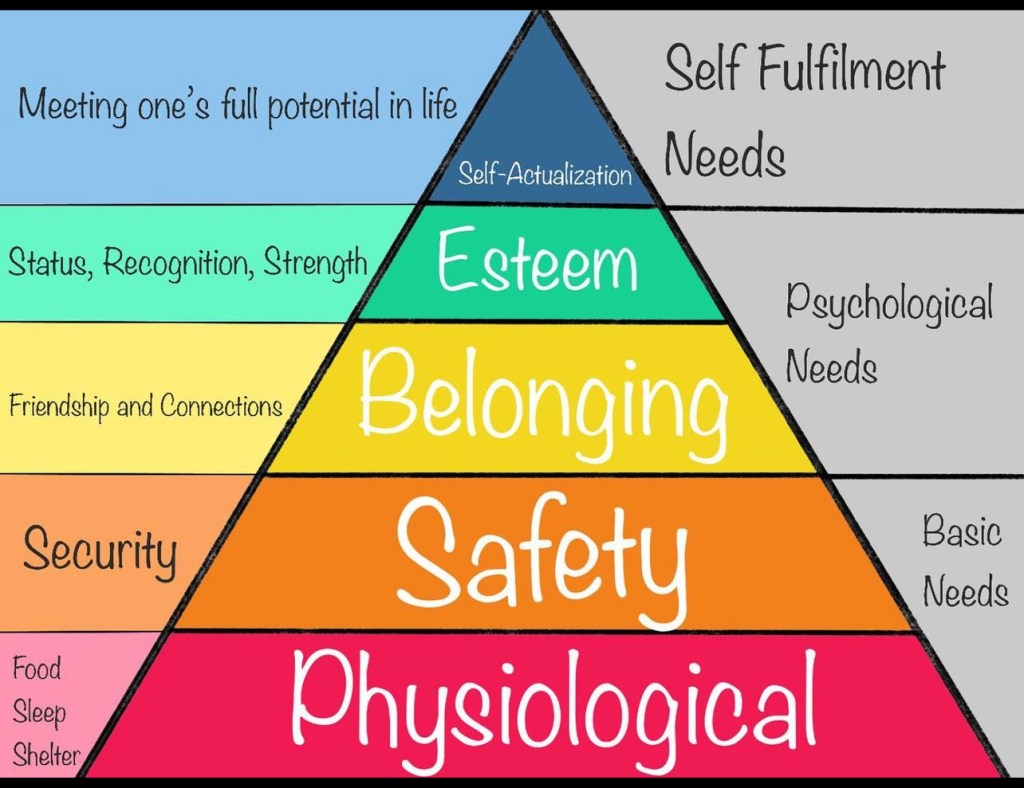
In 2021 I attended a conference led by Tina Boogren about self care in the workplace. She said that creating a positive culture in any environment always started with making sure your team’s basic needs were being met.

Theme: Drink the dang water!

Her point was that when people are looking at how to take care of themselves it is not simply relaxing and having plenty of “you” time, but making sure you are living a healthy life style with plenty of sleep, nutritious food, hydration, and a safe place to call home. Nothing else matters in a work place if a person’s basic needs are not being met. One suggestion that I loved was to make sure you have a fun water bottle that you like, this will encourage you to drink the dang water!

Safety and Security

Next, she went into Maslow’s Hierarchy of Needs; the two bottom blocks make up our basic needs. We already discussed the physiological calls, but what about safety? Safety is not just physical but also emotional and mental safety. In a workplace this looks like security in knowing what is expected of you on a daily basis. If your work environment has no structure then there is a lack of security in knowing what the expectations are each day. This can lead to stress and anxiety that cannot be overcome with relationship building.

Belonging and Relationships

Once you have the basic needs met then you can shift your attention to a sense of belonging with your staff. But the thing about Maslow’s Hierarchy of Needs is the pyramid shifts every day. Just because you set up the environment with security at the beginning of the year does not mean that it is set forever. It is a constant review of how your building is doing as a whole and how your individual people are doing. This is why having those relationships and culture in place will help you check in with your people to determine how they are doing. It is extremely vulnerable to share when a person does not have that base of physiological needs met. So leaders have the impossible job of doing all three blocks (physiological, safety, and belonging) at once. We begin by creating a foundation to start with.

Foundation of Structure in a Workplace

When I accepted my role as a building principal I set out with the motto of “clear is kind”. I looked at all systems that were currently in place and evaluated if they were clear and concise. The first aspect that I addressed, and would encourage anyone else to evaluate, is how information is sent out on a regular basis. I developed a staff index that was broken into 9 boxes; Calendars, Forms for Teachers, SEL, Expectations and Responsibilities, School Building, Individualized Programs, Curriculum and Instruction, Leadership, and Discipline and Referrals. This is our go to location for all information in the building. My staff knows if they need access to anything, it is going to be linked here.

In addition to creating a one stop shop for all information, my staff quickly realized that I prefer to have things written down so that it can be easily accessible. I have created a landing doc for each major aspect of the school year. I have shifted to having my faculty meetings run by using a crisp memo that outlines the goals, whys, and new information. Every bit of information can be found and reviewed when needed and it is always linked on the staff index.

Several components on the staff index were developed with staff help. Everything that impacts my team on a daily or regular basis I made sure to get input before creating and then feedback after implementation. This is where creating security within an organization and building relationships go hand and hand. As I continue my role as a leader I will always review current practices, how I can make things run smoother and how I can support my staff so they feel heard and are valued. So does culture eat strategy for breakfast? I will let you decide.

Crisp Document, Messy Meeting – Does It Work for Educators?

Crisp Document, Messy Meeting – Does It Work for Educators?

Meetings. They are unavoidable and necessary, but there are many times when people walk away saying, “that could have been sent in an email.” During my first year as a principal, I decided to think outside the box to make my meetings as meaningful as possible while being concise and thorough. Since I do not believe in re-inventing the wheel if I can, I started my research.

One evening I was talking to my husband about what I was looking for and he mentioned Jeff Bezos’ concept of a Crisp Document, Messy Meeting. You can find this type of meeting discussed on Lex Friedman’s podcast here. I was intrigued to say the least, based on how it was described it sounded like my type of system. These were my initial takeaways from the Crisp Document, Messy Meeting and the Six Page Memo.

  • Typed out memo – this puts the work on the presenter unlike a PowerPoint that puts the work on the audience.
  • Silent Reading – the memo is not shared ahead of time. The team receives the memo at the beginning of the meeting, and there is a time for silent reading.
  • Discussion – once everyone has read the memo then it is time to have a loose meeting that involves discussing the memo since everyone is on the same page.

Now it was time for me to figure out how to incorporate this in my staff meetings because they are a little different than the meetings that Jeff Bezos was doing at Amazon. I am very limited on time and must have each meeting structured to maximize efficiency. I knew that any memo I created had to be short, easily digestible, and would need to have a structure to the memo that allowed for familiarity so that my faculty could process the information quickly and be able to respond. I created the following format;

  • Introduction – 1 to 2 paragraphs
  • Goals – 1 paragraph
  • Current Reality – 1 to 2 pages
  • Lessons Learned – 1 to 2 pages
  • Strategic Priorities (Next Steps) – 1 to 2 pages
  • Appendix

I decided to give this a try during a faculty meeting that was scheduled to review building safety and intruder procedures. It took me about a week to create the memo and immediately fell in love with this format. I was very hopeful that if my staff found this memo beneficial we could continue using it regularly. The main reason I liked this process is that it forced me to really take my time and make sure I knew exactly what I was wanting to communicate and why. With a PowerPoint you can have a vague idea as long as you bullet point ideas and have graphics. For a memo, it has to be detailed and cohesive for it to read well. I have never felt so prepared for a meeting as I was for this one.

I started the meeting by explaining the structure of the meeting, handed out the memo, and gave everyone 20 minutes to read. The staff was provided pens to take notes and were instructed not to talk during the 20 minutes. After we were finished reading, I guided the group through each section of the memo and we discussed. My staff had great questions and provided valuable feedback. We were able to make immediate changes to our building safety procedures because of this structured meeting.

At the end I asked my staff what they liked and did not like about this type of meeting. Everyone voiced that they definitely wanted to keep this for future meetings. It was well laid out and all questions were answered. No one left feeling lost, which is always what I am striving for. To enhance this process, I made an adjustment to the time allocated for reading. I told staff that I would be at the meeting 20 minutes early and anyone who needed additional time with the memo may arrive then as well.

I used this format 2 more times since then, and it has continued to be a success with my team. I look forward to expanding on this idea in different platforms such as back to school professional development and even when I present at conferences. You can find the memo I talk about in the blog as a reference here. If you have different ways of structuring your meetings I would love to hear, leave a comment below!

First Days on the Job

First Days on the Job

On May 14, 2020, I was hired by the school board of Siloam Springs School District as the new Assistant Principal at the high school. This is a dream job with one of the best administration teams I have had the privilege of knowing.

On July 13, 2020, I started my first official day in my new role. It has been a rollercoaster with many highs and lows in the past three weeks. We are put in impossible situations and have to choose what is best for students and staff- sometimes those do not line up and it makes our job even more challenging.

Over the past three works I have learned so much and wanted to get my thoughts down on paper (blog) to reflect back in years to come.

I am not trying to win a popularity contest.

A few days ago I made the comment, “I don’t think that teacher is going to like me much, but what I am suggesting is best for the students.” My mentor looked at me and said “Brittany, you are not trying to win a popularity contest. You got this job because we trust you and know you will do what is best for students.”

I have to be adaptable.

I also made the comment that I feel like I will be a first year administrator all over again next year when **hopefully** COVID-19 is gone or at least more manageable. The vice principal kindly chuckled and said “It will be something else, that is the job. There will always be something that you are dealing with, you just have to be able to roll with it.”

I will make mistakes.

I made a phone call today, no big deal, just a quick chat. I went and told my boss about it and he said “I would have said that this way… but you already talked to him.” My heart sunk. I felt like I had failed miserably and I was only 14 days into the job. I played it off like no big deal but I have been thinking about it all day. I am writing this hoping I can actually take it to heart- I will make mistakes, and THAT IS OKAY. I have to own them, accept them, learn from them, and move forward.

I need to listen and ask questions.

Clearly these are unprecedented times, so not only am I learning, but so is everyone else. No one has the perfect solution for how to open schools right now. It is times like these that we all need to be able to truly listen to concerns, seek out ideas, and ask questions that get everyone heading in a positive direction.

I know I will learn much more as the years go on, after all, we are all life long learners; but for now I am going to look forward to this next journey and celebrate the start to a new school year.

Educator’s Lifesaving Tip 5: Collaboration

Educator’s Lifesaving Tip 5: Collaboration

As we all navigate the beginning of the 2020 school year, the ability to collaborate is more important now than ever before. This is not only collaboration amongst our content teams, but collaboration across the country as a whole.

Biggest Picture

Three years ago I learned the power of Twitter. I grew my personal learning network from my individual school district to nationwide over night. I began to learn about the twitter chats that take place weekly and teachers across the globe can participate. These chats helped challenge my thinking and grow as an educator to be inclusive of all students backgrounds. I would recommend anyone who is new to education or looking to expand their learning to check out twitter. Here are three of my favorites-

  • #leadupchat Saturdays at 8:00am CST
  • #edchat Tuesdays at 6:00pm CST
  • #EduAR Thursdays at 8:30pm CST

Along with Twitter I use Voxer on my iPhone as a way to communicate and connect with people everywhere. It is a great app that allows you to leave short voice messages as well as written messaging.

Narrowing the Scope

Collecting all sorts of resources across the nation is only a piece of the puzzle. The next step is to collaborate within your region to find partnerships and help all students and families be successful. This aspect is looking outside of the schools and working with businesses to build up partnerships to support student learning.

Right now everyone is struggling with what is to come next. When we look at Maslow’s Hierarchy of needs the base/foundation is the need for stability in the necessity’s; air, food, water, shelter, and clothing. This is not a time to be competitive with one another with test scores. This is a time to come together and determine how best to meet these needs for every single student. Everything else will follow.

Reach out to other school districts in the area and collaborate with one another. We are all in this together to help find solutions to better our nation.

Vertical Alignment

Within our specific districts we need to look outside of our own content area and look for where students are coming and where they are going. This is vertical alignment. In my previous career I was an Algebra 1 teacher. In my role, I needed to know what prior knowledge they had so I could better meet their needs. I also needed to know where students were going so I could prepare them to be successful in their future classes.

It can be difficult to find time– especially if your vertical alignment is in other buildings. But as we have learned this past year, we don’t have to be in the same location to learn from one another. Set aside time to meet with different grade/content levels to learn from one another. Student needs will change every year, therefore, we must make this a regular practice within our schools each year.

Personal Learning Communities

In the state of Arkansas, there is a huge push for all schools to implement PLCs. I have shared before what a PLC is so I will not go into details on that right now. What I will share is that PLC have always been essential for student success, but now it is even more imperative than ever for all parts of education.

Teachers are being asked to do more and more every day; teaching students face to face, remotely, and virtually. Teachers must be given the time to meet with content level teams to answer the 4 questions of a PLC to make sure students are continuing to learn at high levels. With students being literally all over the place physically and academically these questions can help guide learning and ensure students meet the essential learning standards for each subject.

No matter where your district is on the PLC journey, every teacher can still make the decision to get started. Reach out on Twitter or neighboring school districts to see how to get started. We must make collaboration a priority for all stakeholders.

Reflections After the Hardest Year

Reflections After the Hardest Year

Colleagues,

Do you feel like this year has been your toughest year in education? If you do, then you are not alone. I have too many days to count this year wondering what has made this year even harder than the last.

As this school year is quickly coming to an end, I have been reflecting on my career, the educational system as a whole, and where children are academically, socially, and emotionally. Each of these components to my work weigh heavily on my heart. In my role as an Assistant Principal, I make decisions that will drive my career forward as a life long learner, make decisions that have the potential to impact thousands of students, and have interactions with dozens of students a week where I see where they are in all areas of learning and growing as young adults. Some days, the job can feel overwhelming due to our current climate, so here are my takeaways as I begin planning for the next school year.

Passion Drives Progress

I recently spoke with a fellow educator and he asked me what is something about me that he would not find on a piece of paper? I thought about this for a minute, all of my accomplishments or ideas you can easily find on documents that I have worked on in the last 10 years. What I decided to share was my passion for education. It is hard to put into words when you are truly passionate about something. When that passion is what you think about first thing in the morning, gets you through the tough days, and occasionally keeps you up at night thinking about how you can do better.

This is how I feel about education. It is my driving passion. I obviously love my children and my husband and they are also a huge reason I do what I do. But outside of my family, what personally motivates me is my passion for education. This includes wanting to find the best ways to nurture the developing minds of children, creating a positive and healthy work environment, and brining in innovative ways to further teaching in the 21st century. I spend my days reading and day dreaming about what more can we do for education in America. Although some days I feel discouraged, more often than not, I feel inspired and ready to face another day.

Trusting Work Places

My husband started his first year in education and I have to be honest, there have been many nights that I have had a smug look on my face when he comes home utterly exhausted and has nothing else to give for that day. I may have said a time or two “Glad you know what I have been talking about for the last 10 years… teaching is exhausting!” We always say that when you come to work you have to leave your baggage at the door and be ready with a smile on your face for your students and coworkers.

This is very emotionally and physically draining and that it is essential that you have a trusting work place, one that has coworkers who are there for you when you are having a rough day to help lift you up. A trusting place that when you need a minute to talk through the hard things, that you can leave knowing you have spoken in confidence. A trusting place that you know that the people around you are there to support you and help you grow as an educator.

There are plenty of negative comments circulating in the news and on social media about teachers and education. Education is under a microscope right now — what books are in the library, what standards are being taught, what curriculum is being used, what is the districts stand on these hot topics… I am hopeful that things will be easier next year, but this job is hard enough. We must support one another and create a safe and trusting environment so that educators have the mental and physical energy to give students their absolute best.

Maslow’s Hierarchy of Needs

I knew Maslow was on to something with his hierarchy of needs, but it has become abundantly clear in the last two years that without basic needs, safety, and belonging being met for not only students but teachers, then personal growth and learning cannot take place. Teacher burnout and student discipline are both at an all time high, instead of putting more on teachers and students plates, we need to start with the basics.

What I have seen these past two years is that schools had to pivot within the matter of days from in person teaching to remote teaching. This was unavoidable and a part of being in a global pandemic. What schools would have implemented slowly over the course of years was implemented in days. Since then, we have been adding more and more to teachers with blended learning and constantly changing policies and procedures.

I keep hearing “we have to go back to how things were before COVID” but this is just not a realistic statement. The pandemic changed how we do education, so instead of trying to go back we need to start with the basics in this new style of education— are basic needs being met, are there structures in place that ensure safety and security for all, and does everyone have a sense of belonging and know their role and how to perform it on a day to day basis? Once we can answer those questions, then we can move forward with growth and learning.

Change Takes Time

Ultimately, things are changing in education. Some for the better and some for the worst. I have heard podcast and read blogs saying that education in America is going to have to crash and burn before it gets better. I really hope that is not the case, because there is an entire generation that may not be able to recover if that happens, including my children. Give the process time and continue to push for what is best for students. You can never go wrong if you view your work through the lens of “Is this best for my students?”

Protecting Time for Observations

Protecting Time for Observations

Every administrator wants to spend more time in classrooms as it is the most fulfilling part of their job, allowing us to witness the wonderful things that teachers and students are accomplishing in their school. Despite this, classroom observations and walkthroughs often seem to be put on hold. The reason for this is that there are numerous matters that require immediate attention, such as student emergencies, parent complaints, impromptu meetings with supervisors, teacher absences that leave students unsupervised… These distractions can interfere with any administrator’s ability to conduct classroom observations. However, over the past three years, I have implemented strategies to safeguard my time for classroom observations as much as possible.

Purposeful Scheduling

In an attempt to streamline my observations my first year, I designated two hours every Thursday morning as my observation time. I quickly found that this was impractical due to teachers being on prep or having multiple courses during that time. Since then, I have shifted my strategy to a monthly schedule.

My monthly approach follows this outline; at the beginning of the school year I look at the master schedule and create Google Calendar events for all classroom observations for the following month. This allows people to know when I am unavailable for meetings as well as helping me being purposeful about what courses I am seeing. In addition to the calendar events, I also document on a Google Sheet the date and type of course. Throughout the month if something keeps me from attending a specific observation, I highlight the missed observation in red and add a comment as to why I missed the observation. At the end of the month I sit down to schedule the following months observations as well as analyze why I missed observations. This has been a great way to track what type of interruptions I have so that I can determine a plan for how to handle them in the future.

Evaluating Interruption

Interruptions throughout the day are inevitable, administrators have to come up with a way to determine if the interruption should derail the purposefully planned day or not. During my reflections each month I started to group interruptions into 3 categories.

  • Emergency – these are the interruptions that I cannot avoid even with the best planning. I would ask all staff members to interrupt my schedule so that I can address these situation immediately. The main reason for an emergency is a safety concern.
  • Inform– these situations may result in an interruption or they may not, but I need to make that decision. I have asked to receive a text with the basic information so I can decide if this is an interruption or give advice on how to proceed.
  • Document– the last type of interruptions that I discovered are those that did not need to be an interruption at all. I call these “document” situations because I ask for a follow up email. This helps me if the topic comes back around to know how it was handled in the first place.

Once I was able to evaluate my interruptions I had significantly less interruptions during my classroom observations. This is essential work when prioritizing classroom observations.

A Work in Progress

Ultimately, there is no one-size-fits-all solution for protecting time for observations. There are several factors such as the size of your school, the number of administrators, the type of responsibilities you have outside of teacher evaluations… What is important is that you make a plan, reflect on it frequently, and adjust until you find a system that works for you.