Effective Leadership and Organizational Change: A Visionary Approach

Effective Leadership and Organizational Change: A Visionary Approach

It is critical to always be reflective in your current beliefs and practices. It is also critical to practice what you preach. So I have taken the time to revise my leadership framework after several years in an administrative position.

Personal Mission

My mission is to foster an environment rooted in collaboration, inclusion, and ambitious goal setting, driving team growth and development through supportive, effective communication and constructive feedback that leads to achieving team objectives within clearly defined expectations.

Vision for Leading

I believe a team’s success is directly tied to its collective capacity. When building a team, it’s essential to focus on expanding the abilities of each member so that everyone can contribute meaningfully to the process. This approach maximizes team efficiency and ensures that all components function at their highest potential. Effective leadership requires motivating individuals, setting measurable goals, and establishing clear expectations for all members with a focus on the organizations mission and vision. A leader’s role is not only to guide the team but also to place the right people in positions where they can leverage their strengths while developing areas for growth.

Vision for Organizational Change

Change is an inevitable part of life, and how people respond to it often determines their potential for growth. In business, change is not only necessary but essential for progress. It is the responsibility of a leader to recognize when change is required, collaborate with key stakeholders to develop a plan, and effectively communicate that plan to the entire team.

When I encounter challenges that require organizational change, I take a strategic approach. I begin by clearly defining the issue at hand, ensuring that everyone understands its nature and impact. I then establish measurable goals that are easy for all stakeholders to comprehend. This is followed by a detailed analysis of the organization’s current state, outlining how existing practices affect the work being done.

Lessons learned from past experiences are carefully considered, allowing for the development of strategic priorities that address the desired outcomes, current realities, and those lessons. From there, I create an implementation plan, which includes timelines, budget requirements, employee roles, and actionable steps for executing the change. Any supporting documents that provide additional context are also included.

By following this process, I ensure that the rationale for change is clear and that the goals are well-defined, minimizing uncertainty and emphasizing the positive outcomes. My primary concern is always determining when change is truly necessary. Change fatigue is a real challenge, and this method helps me assess whether a change needs to happen immediately or if it can be postponed.

Vision for Collaboration and Inclusion

Collaboration and inclusion begin with a foundation of trust and respect. When these elements are in place, individuals feel safe to share ideas, take risks, and passionately engage in their work. This environment fosters a sense of value and empowerment, encouraging everyone to contribute, which is essential for problem-solving. Employees thrive in a flexible, supportive atmosphere that promotes creativity, leading to higher motivation and productivity.

Leaders play a crucial role in modeling this collaborative and trusting culture. They must demonstrate honesty, transparency, support, and consistency. Building this culture involves celebrating and acknowledging achievements and providing space for team members to express opinions, suggestions, and concerns in a constructive, purposeful way. Leaders should be active listeners, offering accurate feedback designed to support growth, both individually and as a team.

Vision for Goal Setting, Solution Oriented, and Decision Making

Creating an environment focused on goal setting, solution-oriented thinking, and data-informed decision-making hinges on a deep understanding of team dynamics and individual personalities. I believe the most crucial element is fostering an atmosphere where staff are encouraged to take risks and learn from failures. This requires understanding how each person responds to feedback and delivering it in a way that promotes growth. Setting personal, measurable goals is an effective first step in getting to know team members, showing them that their personal development matters just as much as their contributions to the company.

Once I have a solid understanding of my team, I focus on modeling solution-oriented behavior, grounded in data-driven decision-making. It’s essential to assign team members to roles that play to their strengths, enabling them to thrive and achieve both personal and organizational objectives. Establishing processes that keep discussions positive and solution-focused is critical to maintaining momentum. I do this by providing the necessary tools and setting clear expectations, which helps teams stay aligned with their goals and projects.

Ultimately, every decision must be made with the organization’s mission, vision, and goals in mind. Data should serve as the foundation for choices that drive us toward the purpose of each project.

Vision for Communication

My communication motto is ‘Clear and Concise is Kind.’ When preparing to communicate with stakeholders, I focus on minimizing potential miscommunication by being as specific as possible with fewer words. Over-explaining can create confusion, so clarity is key. I also believe in consistent, honest, and accessible communication, as people often need to hear or read information more than once to fully absorb it.

Creating a culture of transparent communication fosters a trusting environment that enhances every aspect of the workplace. Leaders must establish systems that promote regular, two-way communication, encouraging collaboration and ensuring all voices are heard and valued.
Learning Special Education: 5 Takeaways for New Administrators

Learning Special Education: 5 Takeaways for New Administrators

June 2022 I received the exciting news that I was being offered an Assistant Principal position in the top preforming public school district in the state. It was a significant raise from my current role and would offer me several learning and growth opportunities. I was beyond ready and excited for this position! When I went to my first leadership meeting at my new school I was told what my roles and responsibilities would be;

  • Special Education Administrator
  • 9th Grade 504 Coordinator
  • 9th Grade Parent Contact
  • 9th Grade Discipline Support and FINS (Court Representative)
  • Behavior Intervention Documentation
  • Teacher Evaluations- Math, World Language, and SPED
  • Testing- ACT Aspire

I felt confident with my ability to do all of those tasks except Special Education. My undergraduate degree was in early childhood education with an emphasis in special education, so I was significantly lacking expertise in that area but was up for the challenge. Throughout the year I had many highs and many lows when it came to special education; I wanted to share my top 5 takeaways to hopefully help a new administrator stepping into a similar role.

  1. Slow Down– when it comes to making a decision that impacts anyone involved in special education, pause. I am a go getter and like to get things done so this took me some getting used to. There is no rush in making a decision whether it is determining the best consequence when a school rule is violated, determining how to provide services, or staffing issues at the building.
  2. Ask Questions– in addition to slowing down, you have to feel comfortable asking questions. Special education case law, rules, regulations, and compliance are vast and in a lot of cases left open to interpretation. This is why it is important to identify in your district who can answer quick questions and who you need to go to for the more complicated questions. And sometimes it takes more than just one person, you may need to get a group of experts around a table to work out a unique situation. That is okay and should be encouraged. All students deserve our time and effort to put the best plan forward.
  3. The IEP Team is Essential to Student Success– I wish I had realized how important my role as a part of an IEP team was when I was a general education teacher. Every person who has contact with and works with a student is essential to their success. Feedback on how to best meet the students needs will help this student meet their long term goals. Encourage all team members to be active participants in the success of each student. As an administrator, people often times would look at me during meetings to give input on how the student is doing overall. The worst feeling is looking at that parent and not having anything to contribute. Get to know your students and what makes them special to your school community.
  4. What Happens in an IEP Meeting, Doesn’t Stay in the IEP Meeting– sometimes meetings can go sideways. A parent wants one thing and the teacher wants something else and then everyone looks to the administrator to make a decision. First off, decisions are made as a team, not one person can dictate what will or won’t happen for a student. Second, never say anything in a meeting that you are not 100% committed to. As soon as something is said in a meeting, then you better be able to make it happen and you should have data to support that decision. With that having been said, if a student needs a specific accommodation, modification, or service to be successful, then you have to provide it. Have conversations to determine the best way to provide that service and come up with a plan to implement it. Again, you have people in the district who are ready and willing to help you.
  5. Be Honest– sometimes we mess up, that is a part of life. In education we will mess up. We will forget to update a Notice of Action, accidently skip a page when uploading a page into the filing system, miss an accommodation for a student during testing… it happens. When this happens then you need to own it. Do not try to hide it and pretend it did not happen. Go to your supervisor and ask for how to make it better. We can always work through an honest mistake, but what we cannot do is explain why it was not addressed when it was initially discovered.

Can working in special education be intimidating, absolutely! But what I have learned over the past 2 years is I have a ton of people in my corner to help me learn and grow. I have people to ask questions to and support me when determining what is best for all students. Find your people as soon as you step into this role.

Does Culture Really Eat Strategy for Breakfast?

Does Culture Really Eat Strategy for Breakfast?

As I finished up my last semester of graduate school and began applying for administration jobs in education I was told over and over that “culture eats strategy for breakfast” (Peter Dunker). It did not matter how flawless your plans were or how you approached problems when running an organization if you did not have the right culture. Which, absolutely, that makes complete sense. The problem is I have seen too many leaders focus solely on culture and forget that structure and strategy are key components to having a positive culture. So how do we have both?

Basic Needs and Self Care

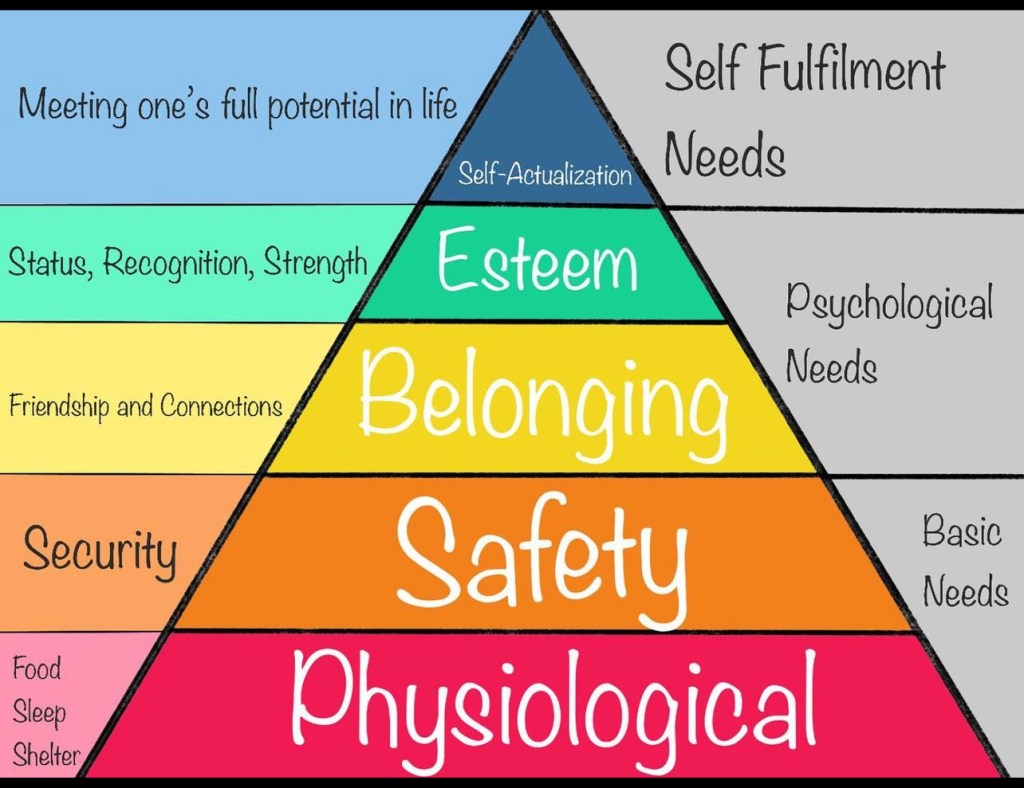
In 2021 I attended a conference led by Tina Boogren about self care in the workplace. She said that creating a positive culture in any environment always started with making sure your team’s basic needs were being met.

Theme: Drink the dang water!

Her point was that when people are looking at how to take care of themselves it is not simply relaxing and having plenty of “you” time, but making sure you are living a healthy life style with plenty of sleep, nutritious food, hydration, and a safe place to call home. Nothing else matters in a work place if a person’s basic needs are not being met. One suggestion that I loved was to make sure you have a fun water bottle that you like, this will encourage you to drink the dang water!

Safety and Security

Next, she went into Maslow’s Hierarchy of Needs; the two bottom blocks make up our basic needs. We already discussed the physiological calls, but what about safety? Safety is not just physical but also emotional and mental safety. In a workplace this looks like security in knowing what is expected of you on a daily basis. If your work environment has no structure then there is a lack of security in knowing what the expectations are each day. This can lead to stress and anxiety that cannot be overcome with relationship building.

Belonging and Relationships

Once you have the basic needs met then you can shift your attention to a sense of belonging with your staff. But the thing about Maslow’s Hierarchy of Needs is the pyramid shifts every day. Just because you set up the environment with security at the beginning of the year does not mean that it is set forever. It is a constant review of how your building is doing as a whole and how your individual people are doing. This is why having those relationships and culture in place will help you check in with your people to determine how they are doing. It is extremely vulnerable to share when a person does not have that base of physiological needs met. So leaders have the impossible job of doing all three blocks (physiological, safety, and belonging) at once. We begin by creating a foundation to start with.

Foundation of Structure in a Workplace

When I accepted my role as a building principal I set out with the motto of “clear is kind”. I looked at all systems that were currently in place and evaluated if they were clear and concise. The first aspect that I addressed, and would encourage anyone else to evaluate, is how information is sent out on a regular basis. I developed a staff index that was broken into 9 boxes; Calendars, Forms for Teachers, SEL, Expectations and Responsibilities, School Building, Individualized Programs, Curriculum and Instruction, Leadership, and Discipline and Referrals. This is our go to location for all information in the building. My staff knows if they need access to anything, it is going to be linked here.

In addition to creating a one stop shop for all information, my staff quickly realized that I prefer to have things written down so that it can be easily accessible. I have created a landing doc for each major aspect of the school year. I have shifted to having my faculty meetings run by using a crisp memo that outlines the goals, whys, and new information. Every bit of information can be found and reviewed when needed and it is always linked on the staff index.

Several components on the staff index were developed with staff help. Everything that impacts my team on a daily or regular basis I made sure to get input before creating and then feedback after implementation. This is where creating security within an organization and building relationships go hand and hand. As I continue my role as a leader I will always review current practices, how I can make things run smoother and how I can support my staff so they feel heard and are valued. So does culture eat strategy for breakfast? I will let you decide.

Crisp Document, Messy Meeting – Does It Work for Educators?

Crisp Document, Messy Meeting – Does It Work for Educators?

Meetings. They are unavoidable and necessary, but there are many times when people walk away saying, “that could have been sent in an email.” During my first year as a principal, I decided to think outside the box to make my meetings as meaningful as possible while being concise and thorough. Since I do not believe in re-inventing the wheel if I can, I started my research.

One evening I was talking to my husband about what I was looking for and he mentioned Jeff Bezos’ concept of a Crisp Document, Messy Meeting. You can find this type of meeting discussed on Lex Friedman’s podcast here. I was intrigued to say the least, based on how it was described it sounded like my type of system. These were my initial takeaways from the Crisp Document, Messy Meeting and the Six Page Memo.

  • Typed out memo – this puts the work on the presenter unlike a PowerPoint that puts the work on the audience.
  • Silent Reading – the memo is not shared ahead of time. The team receives the memo at the beginning of the meeting, and there is a time for silent reading.
  • Discussion – once everyone has read the memo then it is time to have a loose meeting that involves discussing the memo since everyone is on the same page.

Now it was time for me to figure out how to incorporate this in my staff meetings because they are a little different than the meetings that Jeff Bezos was doing at Amazon. I am very limited on time and must have each meeting structured to maximize efficiency. I knew that any memo I created had to be short, easily digestible, and would need to have a structure to the memo that allowed for familiarity so that my faculty could process the information quickly and be able to respond. I created the following format;

  • Introduction – 1 to 2 paragraphs
  • Goals – 1 paragraph
  • Current Reality – 1 to 2 pages
  • Lessons Learned – 1 to 2 pages
  • Strategic Priorities (Next Steps) – 1 to 2 pages
  • Appendix

I decided to give this a try during a faculty meeting that was scheduled to review building safety and intruder procedures. It took me about a week to create the memo and immediately fell in love with this format. I was very hopeful that if my staff found this memo beneficial we could continue using it regularly. The main reason I liked this process is that it forced me to really take my time and make sure I knew exactly what I was wanting to communicate and why. With a PowerPoint you can have a vague idea as long as you bullet point ideas and have graphics. For a memo, it has to be detailed and cohesive for it to read well. I have never felt so prepared for a meeting as I was for this one.

I started the meeting by explaining the structure of the meeting, handed out the memo, and gave everyone 20 minutes to read. The staff was provided pens to take notes and were instructed not to talk during the 20 minutes. After we were finished reading, I guided the group through each section of the memo and we discussed. My staff had great questions and provided valuable feedback. We were able to make immediate changes to our building safety procedures because of this structured meeting.

At the end I asked my staff what they liked and did not like about this type of meeting. Everyone voiced that they definitely wanted to keep this for future meetings. It was well laid out and all questions were answered. No one left feeling lost, which is always what I am striving for. To enhance this process, I made an adjustment to the time allocated for reading. I told staff that I would be at the meeting 20 minutes early and anyone who needed additional time with the memo may arrive then as well.

I used this format 2 more times since then, and it has continued to be a success with my team. I look forward to expanding on this idea in different platforms such as back to school professional development and even when I present at conferences. You can find the memo I talk about in the blog as a reference here. If you have different ways of structuring your meetings I would love to hear, leave a comment below!